Lab Note
Quick Tip for Hanging Wire Antennas on a Mast
A simple, inexpensive way to hang and quickly change wire antennas on a mast during portable testing.
I'm jumping on today to share a quick tip for hanging wire antennas on a mast.
I used this on my last remote operation, and it worked wonderfully. I bought the pieces in bulk from Amazon, and they were inexpensive enough that losing one in the field would not be a big deal.
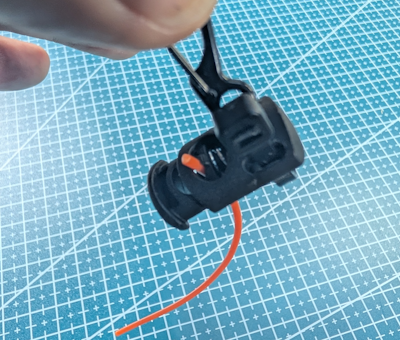
The hanger is made from three small parts:
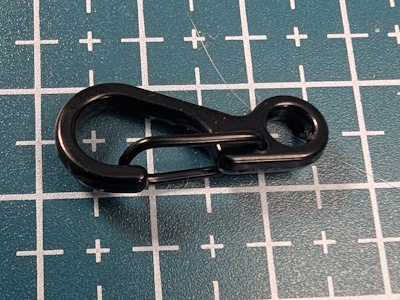
- a small carabiner-style clip
- a drawstring cord lock
- a small zip tie
This small carabiner-style clip was purchased on Amazon. I think I paid around 30 cents each. These are a nice size for this purpose because they do not add much weight to the mast.
The drawstring cord locks are the same general style you might find on clothing or bags to tighten up drawstrings. They are plastic, spring-tensioned, and open with a squeeze.
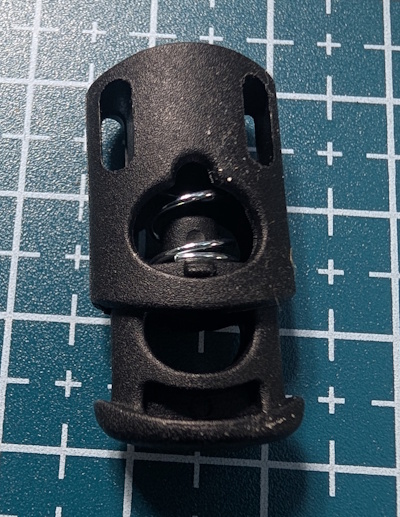
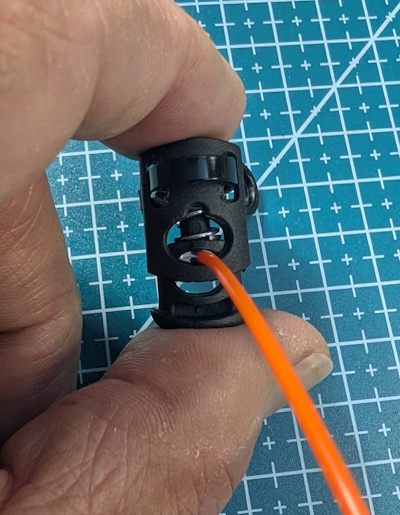
When you squeeze the cord lock, it opens wide enough to slide the antenna wire through the hole. When you release it, the cord lock puts enough tension on the wire to hold it in place.
I tested this in very high wind while holding up about 25 feet of silicone-insulated 14 AWG copper wire, and I did not have any issue with the wire coming loose. Here you can see how the wire slides into the cord lock.
The cord lock also has little slits on the side that work well for placing a zip tie. The zip tie holds the clip and cord lock together. All together, this ended up being as light or lighter than the small carabiners I have seen others use to hang wires.
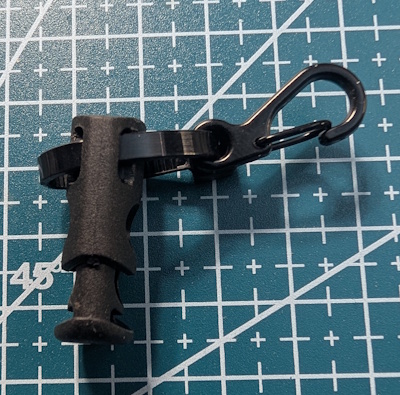
This is useful when you need to adjust wire length or quickly change one wire for another. I prefer this method over rubber bands, Velcro, or worst of all tape. I really do not want anything sticky around my DX Commander pole.
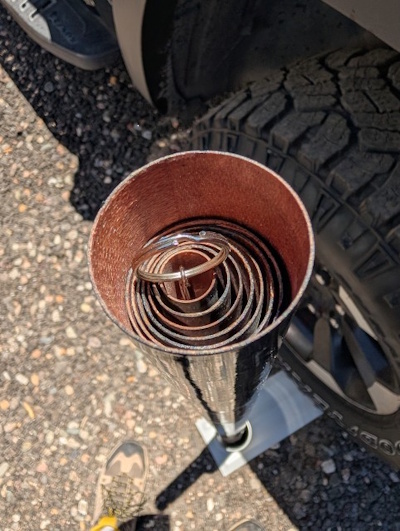
If you read my previous Lab Note, you know that I added a key ring to the top section of my DX Commander pole. That key ring gives this little clip mechanism an easy place to attach.
A few cautions
This is a lightweight field convenience, not a load-rated connector. I would not use it for heavy wire, high-tension setups, or anything that could become dangerous if it came loose.
I would also inspect the cord locks over time. They are plastic, and Arizona sun can be rough on plastic parts. Also make sure the cord lock is not damaging or cutting into the wire insulation, especially if the antenna is moving around in the wind.
For quick portable wire experiments, though, this worked very well for me.
I hope you find this little tip helpful for future deployments. I am already thinking about a few other ways to use these cord locks, and if those ideas work out, you may see them in future Lab Notes. You may even see them if they do not work.
Until next time, 73 from the lab.
Feedback
Found a mistake or have feedback?
Desert Radio Labs is a learning project. Corrections, better test methods, shared results, and thoughtful suggestions are welcome.
Email: feedback@desertradiolabs.com