The Rybakov Antenna
A simple non-resonant vertical wire antenna using a 25-foot radiator, counterpoise, four-to-one unun, common-mode choke, coax, and tuner.
Lab Note
A first portable HF test near Flagstaff using a Xiegu G90, DX Commander pole, Rybakov-style wire antenna, and a 15Ah LiFePO4 battery. The station worked, FT8 did not go as planned, and the trip turned into a useful lesson in testing the whole setup before leaving home.
This was my first real attempt at taking a small HF station out and trying to operate portable for a few hours.
The plan was simple: I was going to be in Northern Arizona near Flagstaff, and I expected to have maybe four hours to play radio. I wanted to try a lightweight setup, get an antenna in the air, make a few contacts if possible, and also test FT8 from an Android tablet.
It did not all go according to plan, but I still consider the trip a success. I made contacts, learned what worked, found a weak point in my digital setup, and came home with a much clearer idea of what needs to be tested before the next trip.
I intentionally kept the station simple.
The main setup was:
The antenna was about 25 feet of 14 gauge wire running straight up the DX Commander pole, with about a 25 foot counterpoise. Since this is basically a random wire antenna, I expected to use the internal tuner in the G90.
The DX Commander pole was extended a little over 25 feet and was supported by the drive-over mast holder with my truck parked on it.
My main goal was to try the station portable and see what I could do from the higher elevation around Flagstaff.
I especially wanted to try FT8. I was curious what the propagation would look like from up there compared to operating from the Phoenix area. I had FT8CN installed on the Galaxy Tab S9, and the app itself installed without any issue.
My assumption was that I could use the Xiegu DE-19 between the G90 and the tablet, get CAT control working, and operate FT8 from Android.
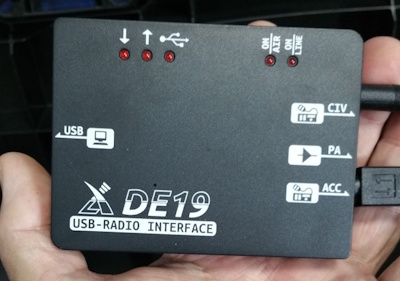
That assumption turned out to be wrong.
I spent a good chunk of the operating time trying to get the Android tablet, FT8CN, the DE-19, and the G90 to work together.
The tablet never seemed to recognize the DE-19 as a usable serial device for CAT control. I was able to decode some FT8 traffic, so I could see that stations were out there and calling CQ, but I did not have the control path working the way I needed it to.
That meant I could listen and decode, but I could not operate FT8 the way I had planned.
After I got home, I tested a Digirig with the Android tablet. The tablet recognized it as a serial device right away and asked which app I wanted to use. That part was simple.
So the lesson there was pretty clear: before taking a digital setup into the field, test the exact radio, interface, cable, tablet, and software combination at home.
Having the pieces is not the same thing as having a proven working system.
The other big factor was the wind.
Flagstaff was very windy that day, and I was operating from dirt driveways at friends’ houses. I was able to get the antenna up at both locations, but I spent a lot of time watching the pole and wondering if the wind was going to become a problem.
The drive-over mast holder did its job. With the truck parked on it, the base was not the issue. The DX Commander pole also held the wire in the air just fine.
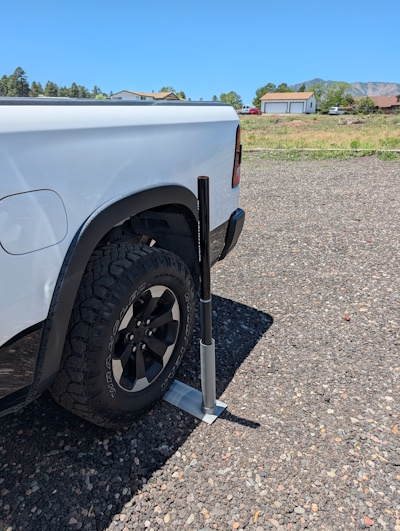
Even so, the wind made the setup feel less relaxed than I expected. For the next version, I may 3D print a sleeve or insert for the mast holder so the DX Commander pole is not rubbing directly against the metal. I need to think through the material and design before calling that a solution, but it is one of the changes I want to explore.
After fighting with FT8 for a while, I switched over to phone operation.
That was the right move.
I was running the Xiegu G90 at 20 watts on 20 meters. The antenna required the G90’s internal tuner, which was expected. The good news is that the G90 has an excellent tuner, and it handled the setup easily.
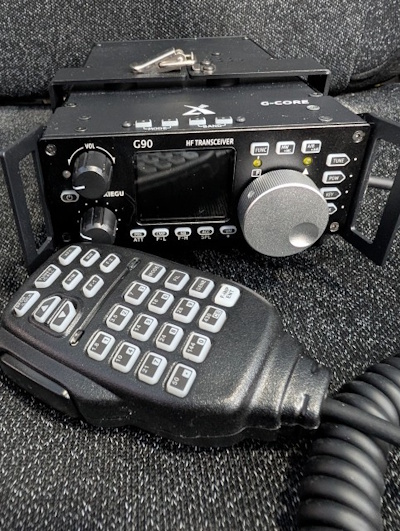
I could hear a lot of signals. In fact, I was hearing better than I was getting out, which is not surprising with 20 watts and a quick portable wire setup.
I was able to make three SSB contacts on 20 meters:
That SOTA contact was especially cool because it was my first one.
That was a nice surprise and probably the highlight of the radio part of the trip. Even though the digital plan failed, the basic portable station worked.
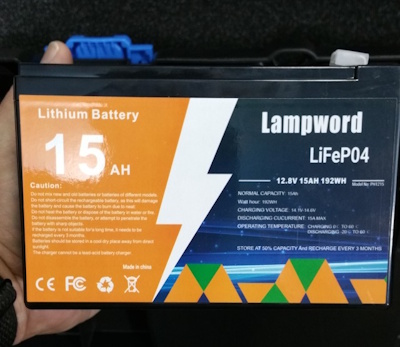
The battery worked great. The 15Ah LiFePO4 battery had plenty of power for this kind of short outing, and I had the radio fused from the battery.
The DX Commander pole worked well as a temporary support for the wire.
The drive-over mast holder also worked. With the truck holding it down, the base was solid, even in the wind.
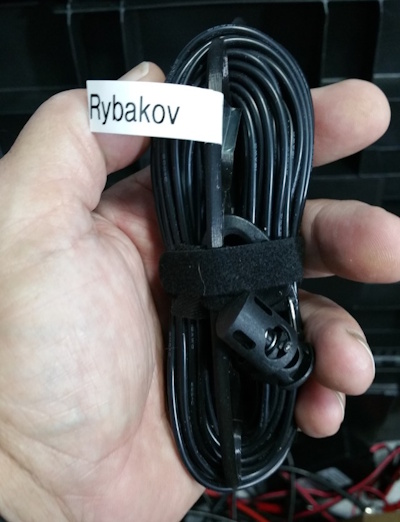
The Rybakov-style wire antenna got me on the air. It needed the tuner, but that was expected. For a simple wire, counterpoise, unun, and portable mast setup, it did what I needed it to do.
And most importantly, I made contacts.
The Android FT8 setup did not work with the DE-19.
That was the biggest failure of the trip, mostly because it was the thing I most wanted to test. I had the software installed, I had the radio, I had the interface, and I had the tablet, but I had not tested that exact combination before leaving.
That cost me field time.
The other challenge was wind. Nothing failed, but wind made the setup more stressful and made me think harder about how I want to secure and protect the mast in the future.
The biggest lesson is simple:
**Test the whole station before leaving home.**
Not just the radio. Not just the app. Not just the cable. The whole chain.
For digital operation, that means:
If one link in that chain does not work, the whole digital plan can fail.
The second lesson is that a simple portable HF station can work. Even with wind, limited time, and a failed FT8 plan, I still made 20 meter SSB contacts from Flagstaff with 20 watts and a wire antenna.
The third lesson is that field operating exposes problems quickly. That is part of the value. I came home with a better understanding of my gear than I had before I left.
Before the next portable trip, I want to:
This trip was not a clean success, but it was a useful one.
I did not get the FT8 test I wanted, and I spent too much time troubleshooting something I should have tested at home. But I did get the antenna up, the radio powered, the station on the air, and three SSB contacts in the log.
For a first portable HF experiment, I will take that.
The main thing I brought home was not a perfect activation or a perfect set of notes. It was a better checklist for next time.
Feedback
Desert Radio Labs is a learning project. Corrections, better test methods, shared results, and thoughtful suggestions are welcome.
Email: feedback@desertradiolabs.com